
Tourismophobia
Tourism has, since its origins, provoked visceral reactions among some people (Gay, 2024). There is a long tradition of mockery and even hostility towards tourists, these “idiots of travel”, to borrow the title of Jean-Didier Urbain’s book (1991), which analyses this disdainful prejudice that has remained remarkably persistent. They are the target of judgements that ridicule or condemn many of their practices. The denunciation of “mass tourism” or “overtourism”, the most contemporary form of tourismophobia, illustrates the constantly renewed character of this phenomenon. It raises an important theoretical issue relating to a form of heterophobia, a concept introduced by Georges Bataille (1951), given the persistence of repulsion directed towards tourists and the continuity of this obsession—even though tourists themselves have changed, their numbers are vastly greater today than in the past, their practices have radically evolved, and tourist destinations have multiplied.
Pejorative words
When the word and figure of the tourist were invented in the late 18th century, it was largely to discredit those thought incapable of travelling properly, who were quickly ridiculed. Their desire to enjoy the spectacle of the world was believed to collide with their supposed inability truly to understand or appreciate it, unlike the traveller. This opposition has changed little over more than two centuries and remains one of the fundamental figures of anti-tourist discourse. The word “tourist” is attested in the English language in 1780 according to the Oxford English Dictionary (OED). It appeared in French in 1803. James Buzard (1993) notes that it immediately acquired a negative connotation. Likewise, the word tourism, recorded in 1811, originally carried a pejorative meaning. The history of the definition and reception of the terms “tourist” and “tourism” in French society reveals an initial flaw from which they have never fully escaped. Even today, the word “tourist” can be insulting, with one of its meanings being “an amateur, a person who takes an interest in things with curiosity but in a superficial manner” (Trésor de la langue française, CNRS Dictionary).
Distinction
In contrast to the traveller, the tourist is often portrayed as passive, undertaking a pointless journey. From the 19th century onwards, a major issue within the field of travel was the definition of its boundaries, in order to exclude those deemed illegitimate, namely those stigmatised by being labelled “tourists”. This classical sociological mechanism of distinction, clearly demonstrated by Pierre Bourdieu (1979), relies on criticism of democratisation (crowds, ease of access, etc.). The fantasy of invasion by numbers lies at the heart of this attitude. The qualitative opposition between the tourist and the traveller is reinforced by a quantitative opposition. Faced with individuals who celebrate their own solitude and cultivate a form of contemporary aristocratism (Thouroude, 2017) there is a mixture of ordinary beings, supposedly devoid of specific qualities. Tourism was very quickly associated with the masses, that is, with an undifferentiated whole. Tourismophobia may therefore be interpreted as a form of classism, which has persisted to this day, perhaps because other discriminatory impulses, including xenophobia, are no longer as openly expressed. Within tourismophobia, there is a negative perception of a double diffusion: social, from the upper classes to the lower classes; and gender, from men to women. Faced with female tourists, the male gaze in the 19th century oscillated between paternalism and sarcasm. The class and gender stereotypes of the time meant that the arrival of women in a destination tended to devalue the place, prompting men to seek out new destinations (Löfgren, 1999).
Nostalgia
Nostalgia constitutes another driving force behind tourismophobia. Tourism is particularly exposed to nostalgic discourse, perhaps because the tourist experience is often based on the shock of discovery. The “first time” one visits a place becomes the reference point against which its subsequent evolution is judged. A nostalgic impulse animates many critics of tourism who no longer find the place as they had “discovered” it and who denounce its “disfigurement”, or the “acculturation” and the “folklorisation” of local societies. Romanticism spreads a form of nostalgic melancholy through the idea that it is now too late, that things were better before. By the end of the 19th century, some tourists in Egypt already felt they had arrived too late, observing that the “authentic Orient” was disappearing under growing European influence. The quest for and excitement of discovering “untouched” lands still exists today, but the contemporary mystique of adventure can be seen as a nostalgia-tinged response to the belief that little remains left to discover. For some people, there is a sense of urgency to visit certain places before they are no longer worth visiting, before it is too late. The cognitive biases shaping our perception of tourist destinations and their evolution are powerful, often leading us to interpret any change as a form of decline or degradation.
Manipulated masses
These socio-psychological considerations are complemented by diagnoses formulated by certain elites who see themselves as lucid in their judgement of the crowd. These mistake the false for the true and are entirely subject to the pressures of capitalism. The artificiality of what tourists see, reduced to a staged décor, and its passivity in the face of a capitalist organisation that manipulates them, are recurring motifs in the condemnation of tourism (photo 1). According to Daniel Boorstin (1962), tourism would consist only of experiences of “pseudo-events”, with tourists contemplating nothing more than spectacles staged for their benefit (photo 2). Tourist crowds are thus alienated, lacking, according to their critics, essential qualities or values: culture, freedom, curiosity, depth, a taste for discovery, adventure and solitude, and the search for authenticity. Such arguments are merely an extension of the conservative opposition to paid holidays during the interwar period, when critics claimed that workers were incapable of making proper use of this newly acquired extra free time.
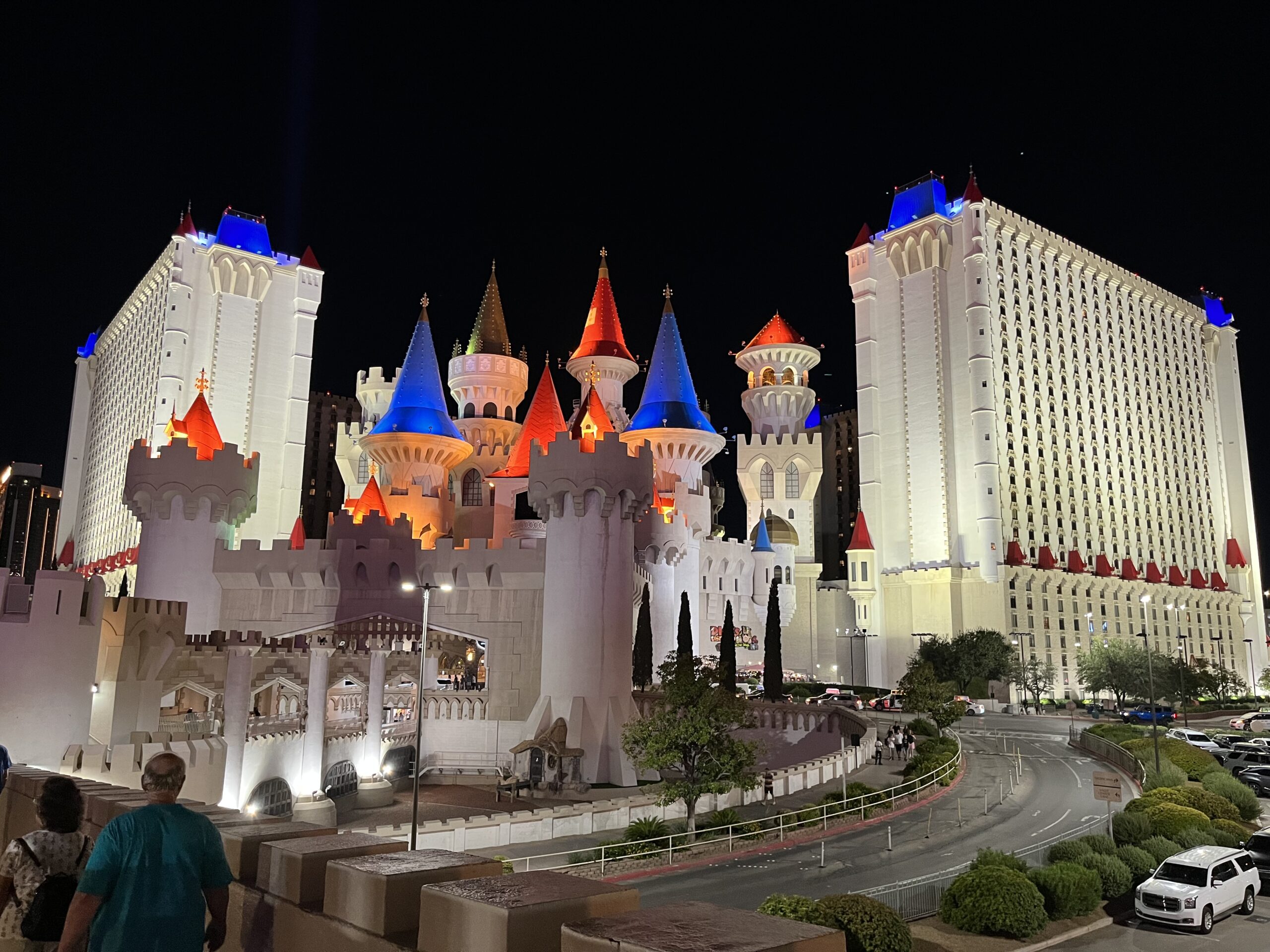
Ill. 1. The Exalibur Hotel in Las Vegas (United States). Source: M. Gay, 2023
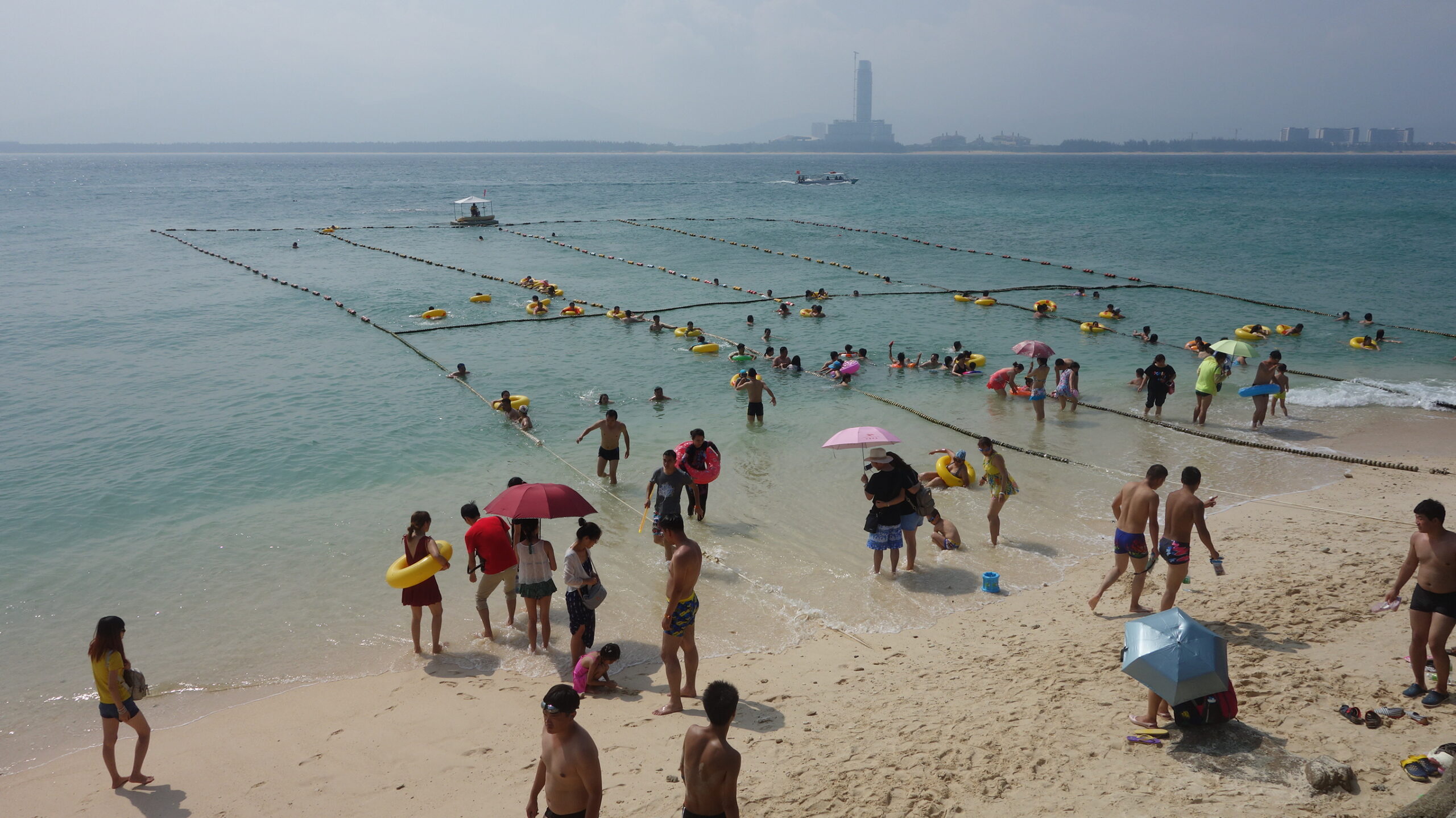
Ill.2. Beachgoers on a secure beach on Hainan (China). Source: J.-Ch. Gay, 2016
The “criticist paradigm”
The condescending gaze of elites does not merely consider the behaviour of tourist masses as the result of conditioning, manipulation, loss of freedom and blindness. The artificial pleasures offered by tourism are often deemed unworthy of serious consideration and, therefore, unworthy of scholarly investigation. This has resulted in a surprising deficit of knowledge and governance regarding tourism, which occupies one of the lowest positions in the hierarchy of social research topics within academic, scientific and political spheres. Rachid Amirou calls this phenomenon the “criticist paradigm” (1995). Despite its economic influence, its effects on other sectors, its importance for employment, the place it occupies in people’s lives and its role in shaping territories, the attention devoted to tourism remains far below what its importance would justify. Such a situation has produced a lack of understanding of this sector, which remains both understudied and under-governed. Furthermore, some destinations have an interest in not producing reliable statistics in order to conceal their shortcomings.
“Ecotourismophobia”
At a time when climate change is increasingly publicised and its effects increasingly visible, tourism is facing a new form of criticism, “ecotourismophobia”, perhaps less unfounded than some earlier critiques, which questions a form of mobility that some consider superfluous. Large sections of tourism and the mobility it generates have been targeted, for example because of their carbon footprint, and citizens are increasingly singled out and held responsible for a worsening situation. Faced with what is perceived as a global environmental crisis, ecological activism has developed increasingly guilt-inducing and prescriptive forms of awareness, designed to address these challenges. One of the most widely circulated examples is “flight shame”, or “flygskam” in Swedish. Cruise ships have also come under scrutiny (photo 3).
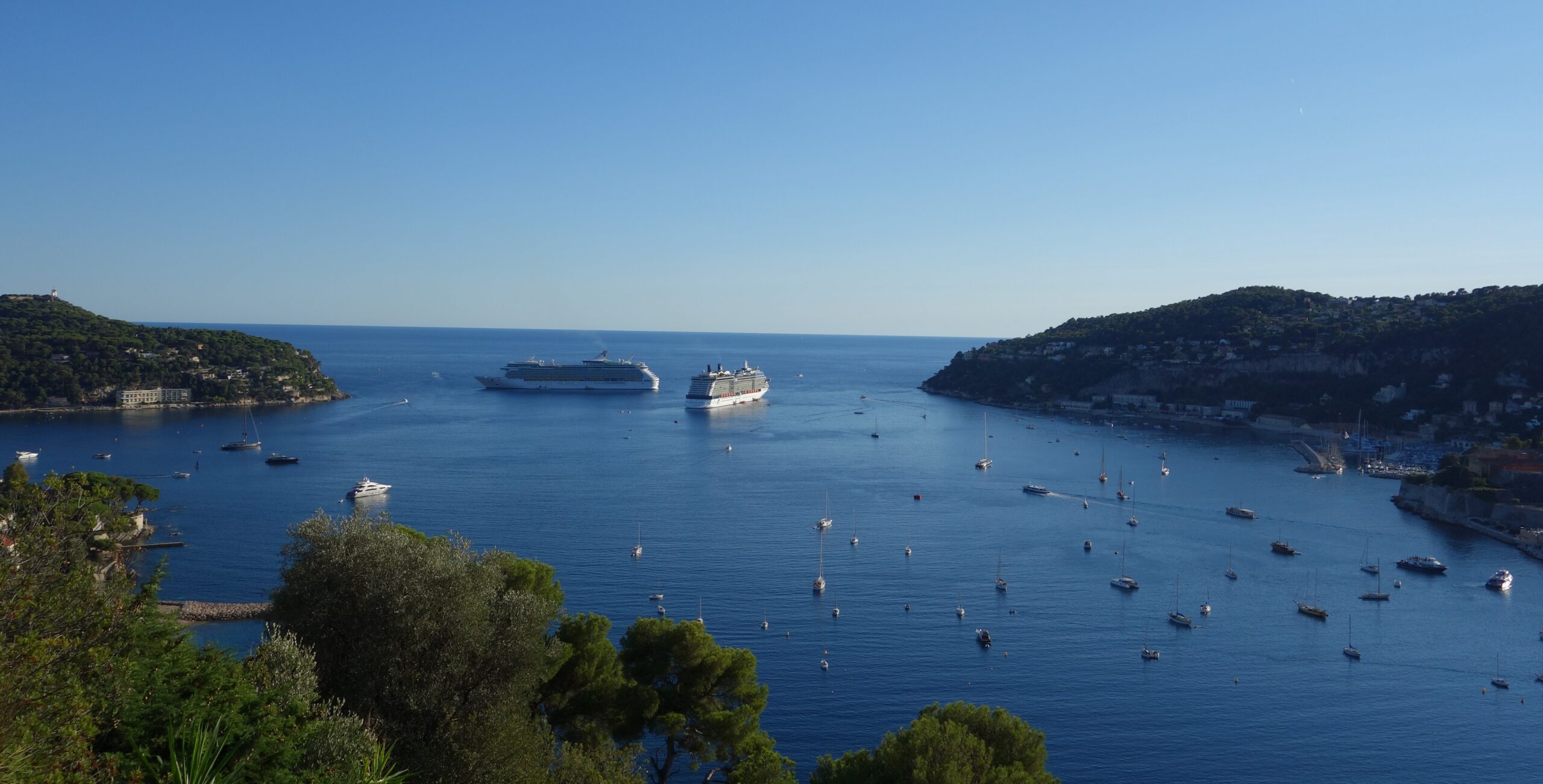
Ill.3. Cruise liners in the harbour of Villefranche-sur-Mer (French Riviera). Source: J.-Ch. Gay, 2017
Bibliography
- Amirou Rachid, Imaginaire touristique et sociabilités du voyage, Paris, PUF, 1995.
- Bataille Georges, « Le racisme » Critique, n° 48, 1951, p. 460–463.
- Boorstin Daniel J., The Image, or what happened to the American Dream, 1962, traduction française, L’Image, Paris, Union Générale d’Éditions, 1971.
- Bourdieu Pierre, La Distinction, critique sociale du jugement, Paris, Éditions de Minuit, 1979.
- Bruckner Pascal & Finkielkraut Alain, Au Coin de la rue l’aventure, Paris, Le Seuil, 1979.
- Buzard James, The Beaten Tracks: European tourism, literature, and the ways to culture, 1800-1918. Oxford, Clarendon Press, 1993.
- Équipe MIT, Tourismes 1. Lieux communs, Paris, Belin, 2002.
- Gay Jean-Christophe, Tourismophobie. Du « tourisme de masse » au « surtourisme ». Londres, ISTE, 2024.
- Knafou Rémy, Réinventer le tourisme. Sauver nos vacances sans détruire le monde. Paris, Éditions du Faubourg, 2021.
- Knafou Rémy, La Surmédiatisation du surtourisme : ce qu’elle nous dit du tourisme (et ceux qui en parlent). Note de la Fondation Jean Jaurès, 21, 2023.
- Löfgren Orvar, On Holiday. A History of vacationing, Berkeley, University of California Press, 1999.
- Morice Juliette, Renoncer aux voyages. Une enquête philosophique. Paris, PUF, 2024.
- Thouroude Guillaume, La Pluralité des mondes. Le récit de voyage de 1945 à nos jours, Paris, Presses de l’université Paris-Sorbonne, 2017.
- Urbain Jean-Didier, L’Idiot du voyage. Histoires de touristes. Paris, Plon, 1991.