
Commerce and tourism
The relationship between tourism and commercial activities, understood here as various retail activities, is ancient and symbiotic. Being a tourist means finding commerce everywhere, in all its forms, designed to meet the needs of the more or less acknowledged homo consumericus embodied by the tourist. A geography conference celebrated the “marriage” of tourism and commerce (CNFG, 2012) alongside numerous economic studies seeking to quantify its impacts (WTO, 2014).
Both activities also have something in common, namely being frequently criticised: as an instrument of a resource-consuming society, whether in terms of goods, services, or mobilities, but also for offering “experiences” whose authenticity is contested, trivialised because commodifying culture(s) and interculturality in particular. Commerce acts as a sounding board for these criticisms. In the early days of tourism, we can see the lament of Henry James, who, in 1882, deplored that the
“city of the Doges [was] reduced to earning its living as a curiosity-shop”.
However, the complaints of some are largely outweighed by the economic advantages for others. Whether as a support for tourism or as an integral part of the tourist experience, commerce is widely valued as an “essential part of tourism [because it] generates income and foreign currency, creating jobs, and providing destinations with greater diversity”. (WTTC 2023). The share of commercial tourism, primarily urban and understood as a key, even a triggering, element of travel, is estimated to account for 6% of the value generated by the sector worldwide (WTTC, 2019). In this respect, attention to commerce feeds into private and public strategies for differentiating destinations.
Commerce as a support service for tourism
Tourists take advantage of landscapes, and seek pleasure, discovery, and thrills. Nevertheless, they remain physical and social beings. avid for goods, either to meet basic needs such as eating or washing, or to bring souvenirs home as an integral part of the tourist experience. The latter is not limited to the places where they are staying and visiting, but also begins and ends with the journey itself. Therefore, commerce contributes to a wide range of amenities at various stages of the tourist journey.
Tourism development has greatly contributed to the expansion of flow-based commerce. This can be defined as any form of retail activity located near transport infrastructure to capture the commercial potential of travel. Without tourism being the sole aspect in societies experiencing daily mobility, it is a major support. The journey time itself is also a tourism moment. This time, whether for meeting routine consumption needs or for consuming more unusual goods, contributes to the development of dedicated commercial facilities. Summer road tourism mobility across Europe is visible in the string of motorway service areas dotted along the main routes. Previously, it was main roads, starting with France’s famous Nationale 7, that supported commercial activity, which sometimes went beyond simply responding to travellers’ needs to offer more “typical” products. On the other side of the Atlantic, the legendary Route 66 would not be what it is without its multitude of commercial facilities and diners. These commercial add-ons apply to all modes of transport. Just think of the famous airport duty-free shops, originally specialising in alcohol, tobacco, and luxury goods. Today, what they offer has been greatly extended to include many international brands, particularly in the fashion sector. Railway stations have followed suit, increasing their retail offerings beyond simply meeting travellers’ immediate consumption needs.
This commercial presence can become intrusive. Owing to the subjective nature of this perception, it is difficult to assess the ideal level. It can, however, be understood when a malfunction reveals an imbalance that could paradoxically generate a form of repulsion. Therefore, care should be taken to avoid excess: the difficulties encountered at Bangkok’s newly commissioned airport in 2006 were attributed to an architectural design that privileged retail space at the expense of the tool’s actual functionality! It was accused of being a shopping centre on aircraft parking spaces. The situation has since improved, but this airport was merely following an international trend. In airport rankings, facilities including services and shops are now considered a key criterion. Furthermore, it is a key element of airports’ financial equilibrium. But this is provided only on the condition that logistical efficiency and safety are not overlooked.
The places where tourists live and visit also generate commercial activities. The range of retail facilities concerned highlights the diversity of types of tourism. Shops supplying tourists include small shops and convenience stores in campsites. The very essence of all-inclusive resorts, whether in the mountains or at the seaside, is that everything is available on-site, including shops catering to everyday needs. More generally, tourism helps to strengthen existing commercial facilities. In this way, supermarkets and hypermarkets benefit from tourism spending, sometimes even at the expense of more appropriate shops, which often charge higher prices, relegating them to the role of providing occasional convenience. Beyond food and basic goods, tourists also contribute to the turnover of shops, particularly those selling personal items. This is true for fixed retail outlets but also for markets that are much larger during the tourist season, with stalls selling fruit and vegetables as well as a touch of, sometimes questionable, regional identity, as is the case with summer markets in Provence or those by the sea.
The commercial impact of tourism also starts in the countries of origin. For example, all shops selling leisure and sports equipment, not to mention travel agencies, which accompany tourists on their more or less adventurous trips. The experience can be anticipated or prolonged by “exotic” consumption in the countries of origin. Tourism, or the aspiration for travel, discovery, changing scenery, thus involves the development of “ethnic” shops, such as grocery stores that allow consumers to reconnect with flavours they have encountered, or an expanded offer of products discovered on site or contributing to the construction of an imaginary place, for example, various furniture and decorative items that prolong this sense of “elsewhere” in the privacy of the home.
The souvenir shop is an emblematic example of the forms of commercial facilities generated by tourism. This originally French term, used by the English since the 18th century, has become a model found worldwide. Here again, the commercial expressions of this specific purchasing act are extremely varied, ranging from actual stores, sometimes forming long, uninterrupted rows, to more or less official itinerant traders found in some of the most remote tourism areas. Sometimes, this commercial omnipresence is criticised. These complaints are by no means new, with Louis Bertrand, during his early 20th century travels in the Orient, already lamenting that at the foot of the Egyptian pyramids “one [has] to neglect the splendid desert landscape to deal with tacky scarabs and ersatz Osirises churned out by the dozen by Italian moulders”. Nowadays, the reference would more often be “made in China.” Even if this somewhat tarnishes the authenticity of the experience, it ultimately detracts little from a souvenir (object), which is elevated to the rank of proof of the encounter with otherness that was sometimes barely experienced, and even deliberately avoided, on site. This trigger for tourists’ memories, the physical crystallisation of a trip, with its adventures, discoveries, and surprises, helps to relive some of the sensations and also share parts of them with others, those who did not go there. In this respect, this souvenir, from the fridge “magnet” to more luxurious objects that convey an exotic cultural dimension, such as representations of a belief, a historical period, or external symbolic systems, is valuable precisely because it prolongs the tourist experience. Even if it is not always assumed by certain purists who prefer to be seen as travellers rather than tourists.
“It was time to think about bringing back a few trinkets for our loved ones. After an absence devoted to pleasure and culture, you need to know how to make yourself popular with those left behind.
-I hope you’re not planning to scour the shops, I was warned. I’m warning you, souvenirs give me hives.
-No, of course not, just imagine. It isn’t our style.”
(Ségur, 2008, p. 159)
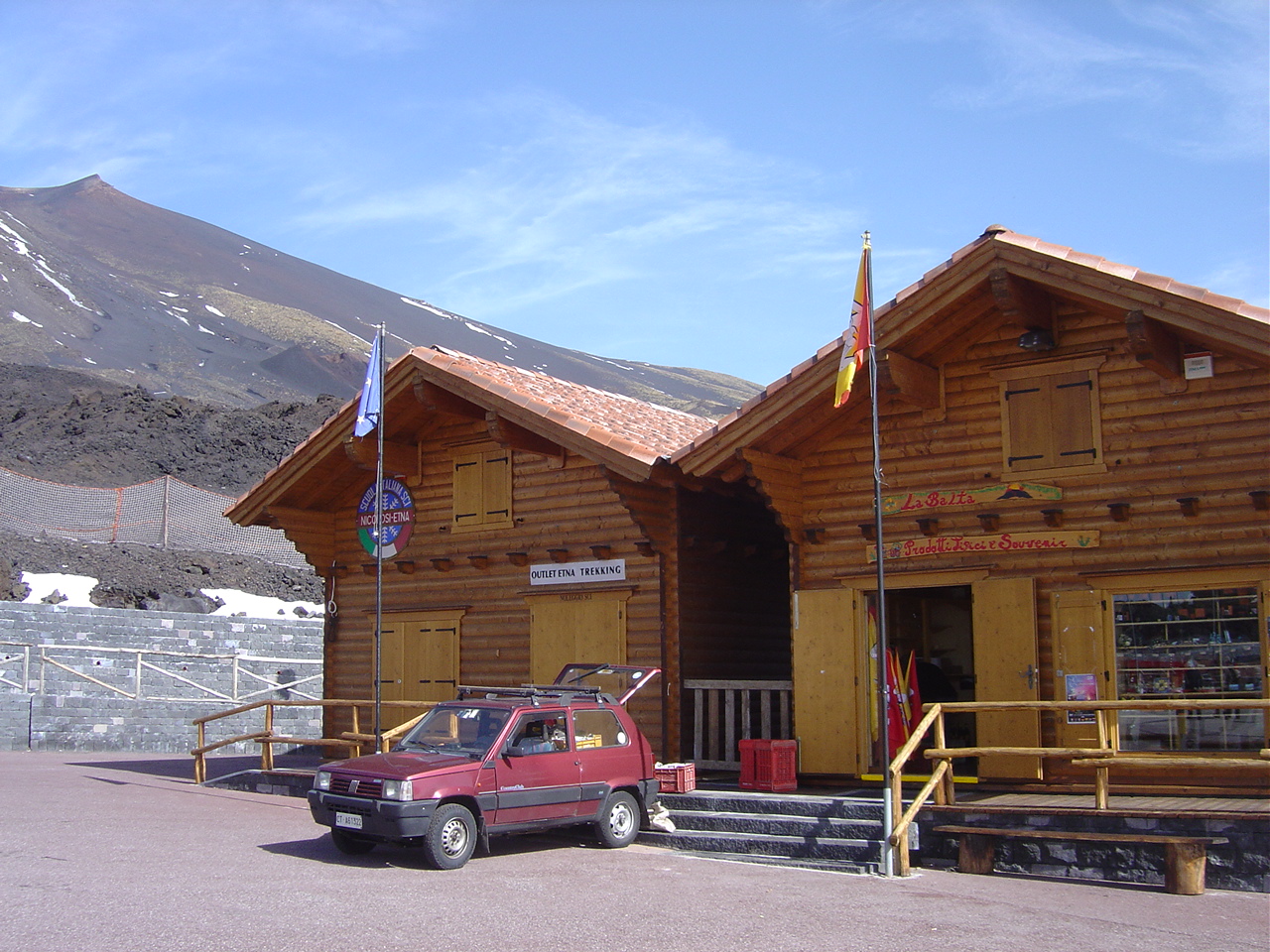
Ill. 1 Souvenir shops halfway up Etna, Philippe Dugot, 2011.
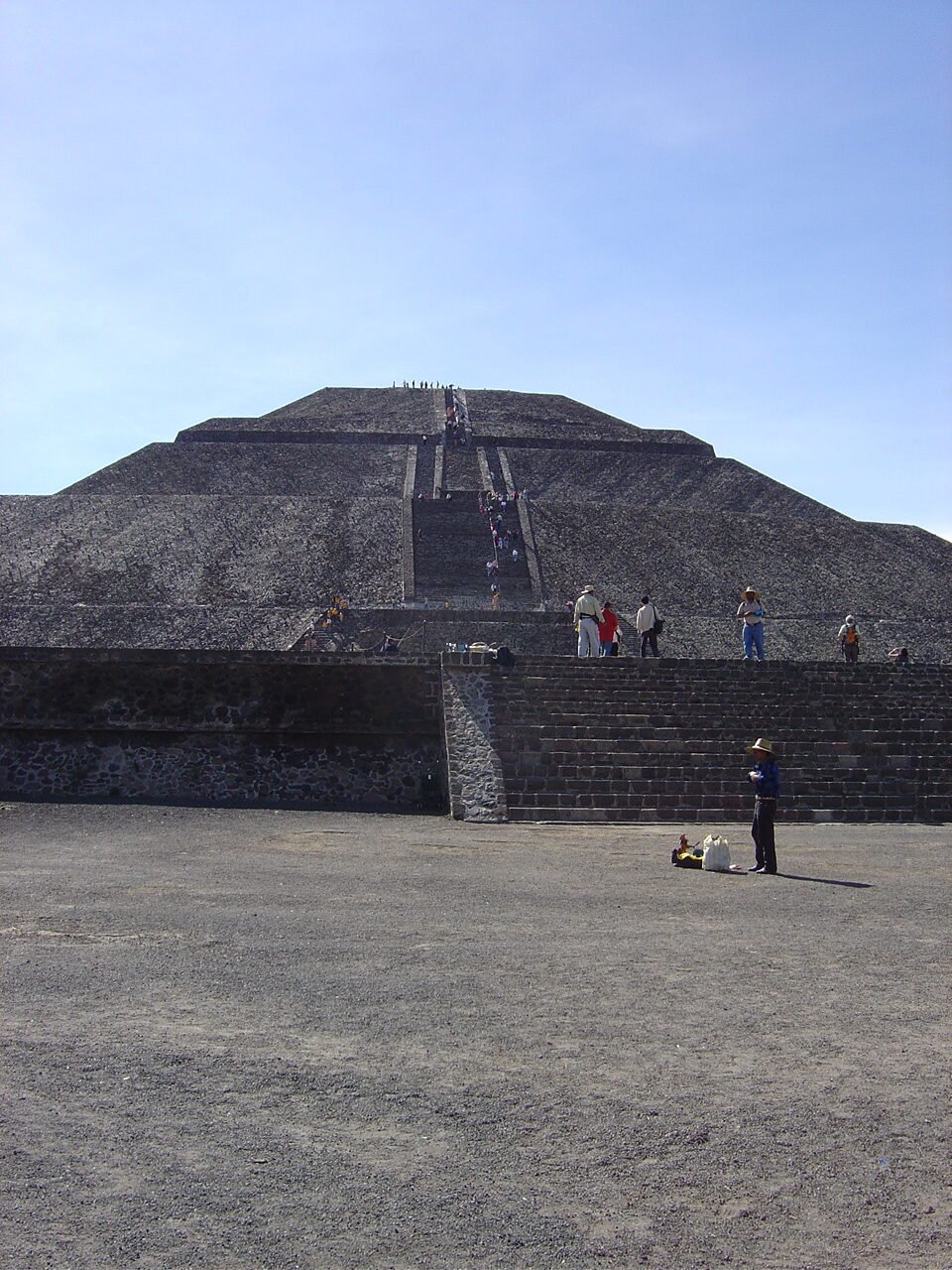
Ill. 2 Itinerant traders at the foot of the Teotihuacan Pyramids, Philippe Dugot 2005.
Through commerce alone, tourism reminds us that it is a major driver of animation, even reanimation, of a present-day economy. One example of this is the listing of Albi on UNESCO’s World Heritage List and the 1.3 million tourists (2022) who contributed to the boom in commercial activity around Sainte-Cécile Cathedral.
Commerce as an integral part of the tourist experience
A reflection, or ransom, of a dominant consumer society, commerce is no longer simply a servile accompaniment to tourism. It increasingly leads tourist flows. It is no longer simply a souvenir shop, but a facility sufficiently large to be an attraction, not just in passing, but in its own right. Thus, commerce becomes the main, even sometimes the sole driver of a territory’s “touristicity” (WTO, 2014).
A distinction should be made between two types of commercial tourism, one where the heritage dimension acts as a central support in the “touristicity”, and the other with creations built out of nothing where commerce is in command. Very often, given the expected or anticipated returns, public authorities on a national and local level, are active accomplices in this development (Muro-Rodríguez et al., 2020), providing favourable conditions for commercial activities (care taken with the public space, mobility) and/or in longer-term strategies, working on preserving an initial heritage base or planning more selective forms of tourism where “masses” are no longer desired. Within the heritage register, commerce itself can be a heritage object. Old shops selling typical products, bookshops, and department stores are all identity markers for the society visited. Take Harrods in London, KaDeWe (Kaufhaus des Westens) in Berlin, and Galeries Lafayette in Paris. Thus, commerce contributes to a wider heritage industry, that of a city or an urban model. A few years ago, Barcelona, a major destination for urban tourism, proclaimed itself the “Best Shop in the World”. In Paris, luxury is reflected in the image of the “City of Lights”. Milan also plays the same card. In addition to these examples, a broader process of commodifying urban tourism has been rolled out with flagship stores for brands that actively contribute to City branding. This “tourism shopping” owes much to the boom in Asian tourism (Duhamel, 2018). Thus, since luxury goods are 30% cheaper than in China, Chinese tourists are also good customers. Galeries Lafayette has even dedicated a space to this clientele, the Shopping Welcome Center, opposite its flagship store on Boulevard Haussmann in Paris, to facilitate their consumption-oriented visits.
The role of commerce is fundamental in this process, but it involves a paradox: the tourism promotion of a city supported by claims of urban singularity is based on international brands that contribute to the globalised standardisation of consumption. This commercialisation of heritage, as well as the tourism-driven development of commerce, carries the risk of “Disneyfication” of territories, the “museumification” of historic centres, and the “folklorisation” of the commercial object (figure 3). Thus, the latter may be presented as a paragon of commerce for the place and marginalised in the practices of locals (at least some of them) by crowds of tourists who are nevertheless there in search of authenticity. This is particularly the case of souks, at least those that form part of tourist circuits, from the souks in Marrakech and Tunis to Istanbul’s Grand Bazaar. More than a century ago, Louis Bertrand already noted that,
“the Oriental bazaar is little more than a memory […] The small stalls of the common people and the large stores for tourists are invaded by a dreadful collection of German or Austrian trinkets.”
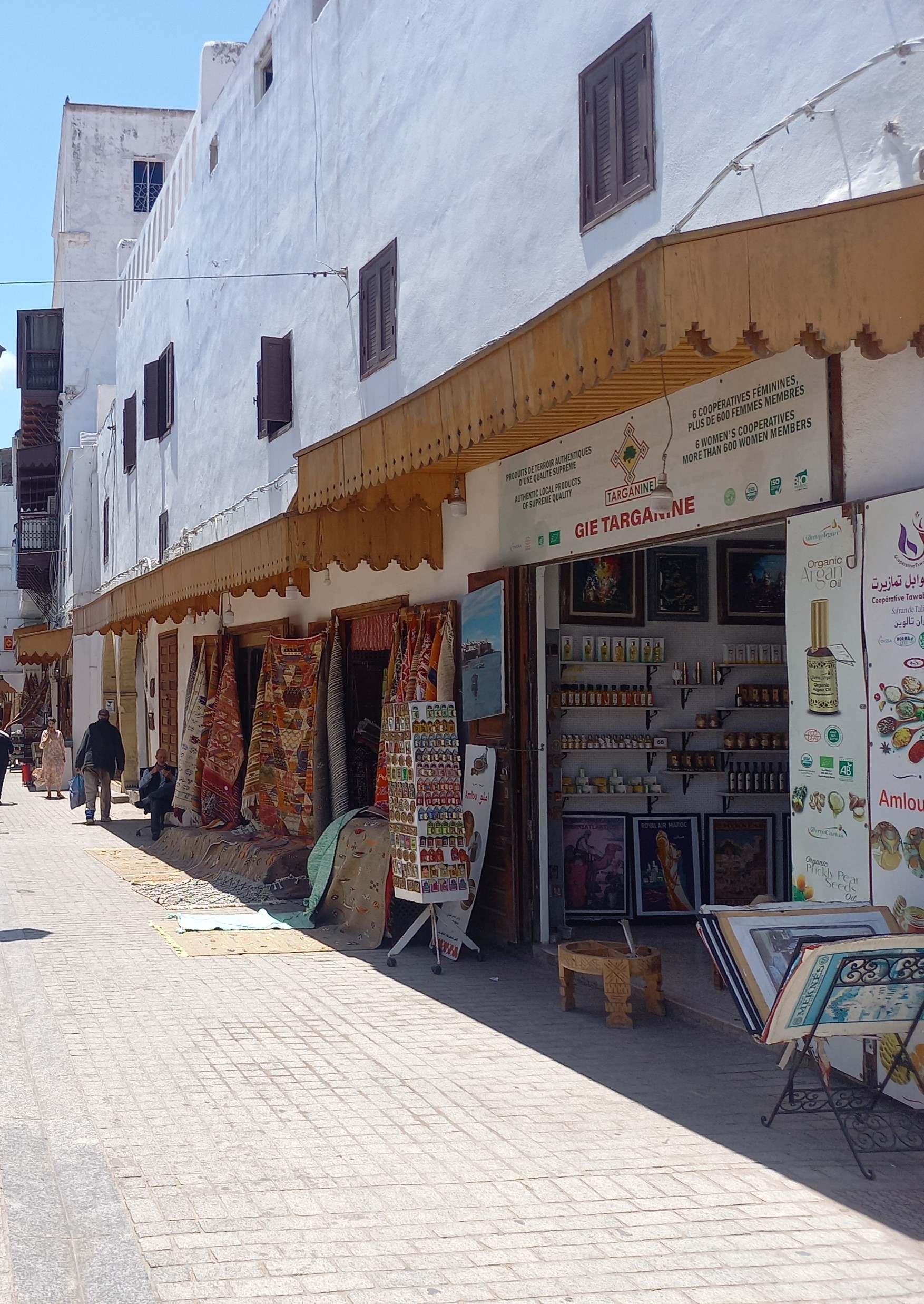
Ill. 3 Argan oil, magnets, and Oriental rugs awaiting tourists in the medina of Rabat – Source: Philippe Dugot 2024
Whatever the case, an economically profitable dialectic continues to develop between commerce, more or less linked to heritage, and the actual heritage of territories. It is not always for the best, but the relationship is undeniable. Beyond being a revitalising addition to a larger body, commerce is increasingly becoming the sole driver of a tourist attraction. Modern commerce is at work, producing vast shopping centres designed to attract visitors from far beyond local catchment areas. In the United States, we know that one of the country’s leading tourist attractions is the Mall of America (MOA), a shopping mall. With 40 million visitors in 2021, this shopping centre is just behind Times Square, Central Park, Las Vegas, and Union Station in Washington. It is followed by another Mall, not commercial this time, the National Mall in Washington, and is largely ahead of Disneyland in California and the Grand Canyon! Initially attracting national visitors, it nevertheless features prominently in the itineraries of international tour operators. It offers 520 shops, a varied selection of catering options, and many attractions. It benefits from Bloomington, Minnesota’s central location. This type of project does come up against societies concerned with preserving agricultural land or seeking local development projects less driven by feeding consumerist excesses. The major retail project EuropaCity, in the Triangle de Gonesse near Roissy airport in northern Paris, experienced this at its own cost. Elsewhere, in emerging economies where there is less resistance, commerce is, on the contrary, mobilised as a tourism driver through a form of funshopping and retailtainment (a contraction of retail and entertainment). Thus, Dubai is the kingdom of “bling-bling” based on a strategy of residential and tourist attractions. Still in the same vein of a tourist attraction based on a commercial creation, we could mention the many outlet villages, where different brands are sold at discounted prices, diverting and attracting significant tourist flows (Lamy, 2012). In France, there are about 20 such structures. Border regions are also focal points for dedicated commercial activity, often fuelled by price differences for specific products. These areas attract not only local day excursionists but also significant tourist flows. One example of this is Andorra. The high-altitude Pyrenean principality, a consumer paradise, has become a “logistical heresy”, with goods transported uphill by lorry only to be carried back down in the boots of private cars (Dugot, 2013). Andorra is trying to change its image as a high-altitude supermarket through winter tourism and other activities, but shopping centres remain a key feature of its tourist offer.
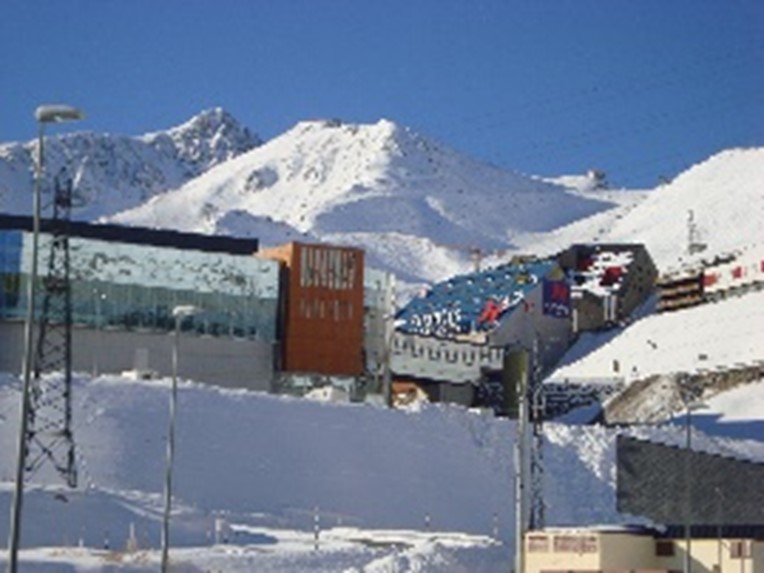
Ill. 4 El Pas de la Casa (Andorra) in winter, Philippe Dugot, 2011.
In view of the revenue generated by consumption, in addition to urban development policies targeting the sites concerned, public authorities have not hesitated to adapt legislation. While the MOA, referred to earlier, did not itself prompt the fact that Minnesota does not tax the purchase of clothing, its management is a fervent defender of this specificity, “loved by consumers from outside the State”. In France, the country of restrictive labour laws, Zones Touristiques Internationales (ZTIs) were introduced in 2015, allowing exemptions from Sunday trading regulations. Ten (out of 18) such zones are located in Paris, partly in response to concerns expressed by a former prime minister who found it a pity that Chinese tourists might visit monuments in Paris only to end with a shopping spree in London! Recent statistics reinforce this analysis: although France remained in 2022 the world’s leading destination for international tourist arrivals, it ranked only sixth in terms of the direct economic contribution of commercial tourism, close to but just behind the United Kingdom (WTTC, 2023).
Link to the list and locations of Zones Touristiques internationales, tourist zones, commercial zones, and railway stations in the Île-de-France region (Source: Prefecture of the Île-de-France region and Prefecture of Paris – 2020):
Tourism and commerce, a shared heuristic chorography
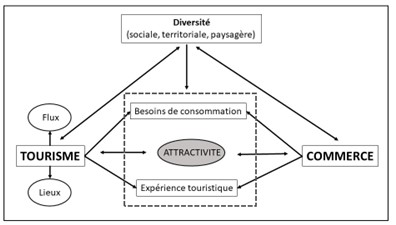
Ill. 6 The heuristic complicity between tourism and commerce – Source/author: Philippe Dugot, 2024.
Commerce thus constitutes an integral part of the tourist experience in several ways, making the combination of tourism and commerce both obvious and multifaceted. This helps clarify one or other of the two activities, as well as the geographical and social contexts of their deployment. The commercial forms, through their clientele, mirror the socio-spatial footprint of tourism. Conversely, commerce, once it becomes a target for tourism, generates a specific form of tourism with its own attributes. As a marker of identity, the purchasing act is often the principal, and sometimes the sole, point of contact with the otherness of the societies visited. The frequent diversion of authenticity, revealed by the origins of the products sold, is the commercial and tourism echo of globalisation.
In its intersection with tourism, commerce also says much about the mentalities of Western and emerging societies alike. The consumer register, with all its ambivalences, deserves closer examination. A later or complementary stage to Fordist consumption, it is also about standing out: “I’ve done this destination”, “I bought this”. It is interesting to note a contradiction here: tourism is about a change of scenery, a change of scenery that the goods consumed bear witness to. Yet, at the same time, a significant proportion of tourists need reassurance, particularly regarding food, which explains the prevalence of international chains that offer a certain degree of standardisation. Another paradox is that these major international brands, including those tourists already have at home, are powerful attractions. This may be due to preferential pricing or to the specific value of a brand item purchased in its country of origin. The case of Louis Vuitton is emblematic, with Asian tourists queueing outside the flagship store on the Champs-Élysées to buy a product that tastes different from an equivalent purchase made in an otherwise identical store at home. It is not uncommon to see tourists photographing themselves in front of such shops or department stores to say, “I was there”.
Commerce and tourism share the ambivalences of economic activities regarding sustainability. By definition, both appear to contradict the need for sobriety that inevitably arises when sustainable development, or, in other words, the need to change, is invoked. The two sectors respond, with sustainable or ethical tourism finding an echo in shopping centres certified with High Environmental Quality (HQE) standards. In both cases, greenwashing is never far away, using palliative measures that fail to address the heart of the problem: water and waste management, renewable energy production, various savings, etc. Things are improving, but in both cases, the mechanism is often that of an adjustment to new marketing constraints. Tourist destinations can no longer be promoted in quite the same way as before, just as excessive consumption of goods has become increasingly negatively connoted. The contradiction is so deeply embedded that it can only give rise to imperfect adaptations, especially given that tourist/consumer demand remains strong. A joint reflection nevertheless remains essential, all the more so as commerce is at the forefront of accusations concerning the commodification of the travel experience. Together or separately, commerce and tourism present themselves as hermeneutic tools to address a much broader problem, namely the transition towards greater sobriety in our modes of consuming the oecumene, to move beyond the recurring accusation of being “world-devouring parasites” (Christin, 2017).
Bibliography
- Bertrand Louis, 1908, « Le mirage oriental », Revue des Deux Mondes, tome 47, 37 p.
- Christin Rodolphe, 2017, Manuel de l’anti-tourisme, Montréal, Ecosociété, 141 p.
- CNFG, 2012, Enjeux touristiques et lieux commerçants, Colloque de Reims, CNFG, Commissions « géographie du commerce » et « géographie du tourisme et des loisirs ».
- Dugot Philippe, 2013, « L’Andorre, de l’isolat pyrénéen au supermarché montagnard », dans Lebrun Nicolas (dir.), Commerce et discontinuités, Arras, Artois Presses Université, p. 57-68.
- Duhamel Philippe, 2018, Géographie du tourisme et des loisirs, Paris, Ed. A. Colin, 256 p.
- James Henry, 2006 [1909], Heures italiennes, Paris, Éditions La Différence, 539 p.
- Lamy Caroline, 2012, Des centres de magasins d’usine aux villages de marques : nouvelles traductions du concept, nouvelles localisations, nouveaux enjeux territoriaux, Thèse de doctorat en Géographie-Aménagement, Brest.
- Muro-Rodriguez Ana Isabel, Roberto Pérez-Jiménez Israel, Sanchez-Araque Jesús Antonio, 2020, “Impact of Shopping Tourism for the Retail Trade as a Strategy for the Local Development of Cities”, Frontiers in Psychology, vol. 11, Janvier, 5 p.
- Sangeeta Peter, Victor Anandkumar, Len Tiu Wright, 2016, “Deconstructiong the Shopping Experience of Tourists to the Dubai Shopping Festival”, Cogent Business and Management, vol. 3, Issue 1.
- Ségur Philippe, 2008, Vacance au pays perdu, Buchet-Chastel, 241 p.
- WTO, Global report on Shopping Tourism, Madrid, UNTWO, 2014.
- WTTC, Global Retail Tourism : Trends and Insights, Rapport, 2019.
- WTTC, Global Retail Tourism : Trends and Insights, Rapport, 2023..